
Madam V: Virginia Vernon’s War
For seven years, the Entertainment National Services Association (ENSA) became as much a staple of British military life as NAAFI tea and peeling spuds. To coincide with the 80th anniversary of ENSA’s final performance, I have co-written a new biography of Virginia Vernon (Madam V, to those who knew her), the Chief Welfare Officer of that very British institution. Her private papers, letters, and diaries provide a backstage pass to ENSA, its tempestuous relationship with the military, an eyewitness account of many of the theatres that Britain fought, and the remarkable work its troupers did from the Orkneys to Hong Kong. I (virtually) met my fellow author, Professor Adam Fairclough, Virginia’s godson, after I published this blog post about two years ago, and it only seems fitting to complete that circle by writing an article about the book. This article takes a fresh look at ENSA through the lens of Madam V’s war and considers the organisation’s overlooked legacy.
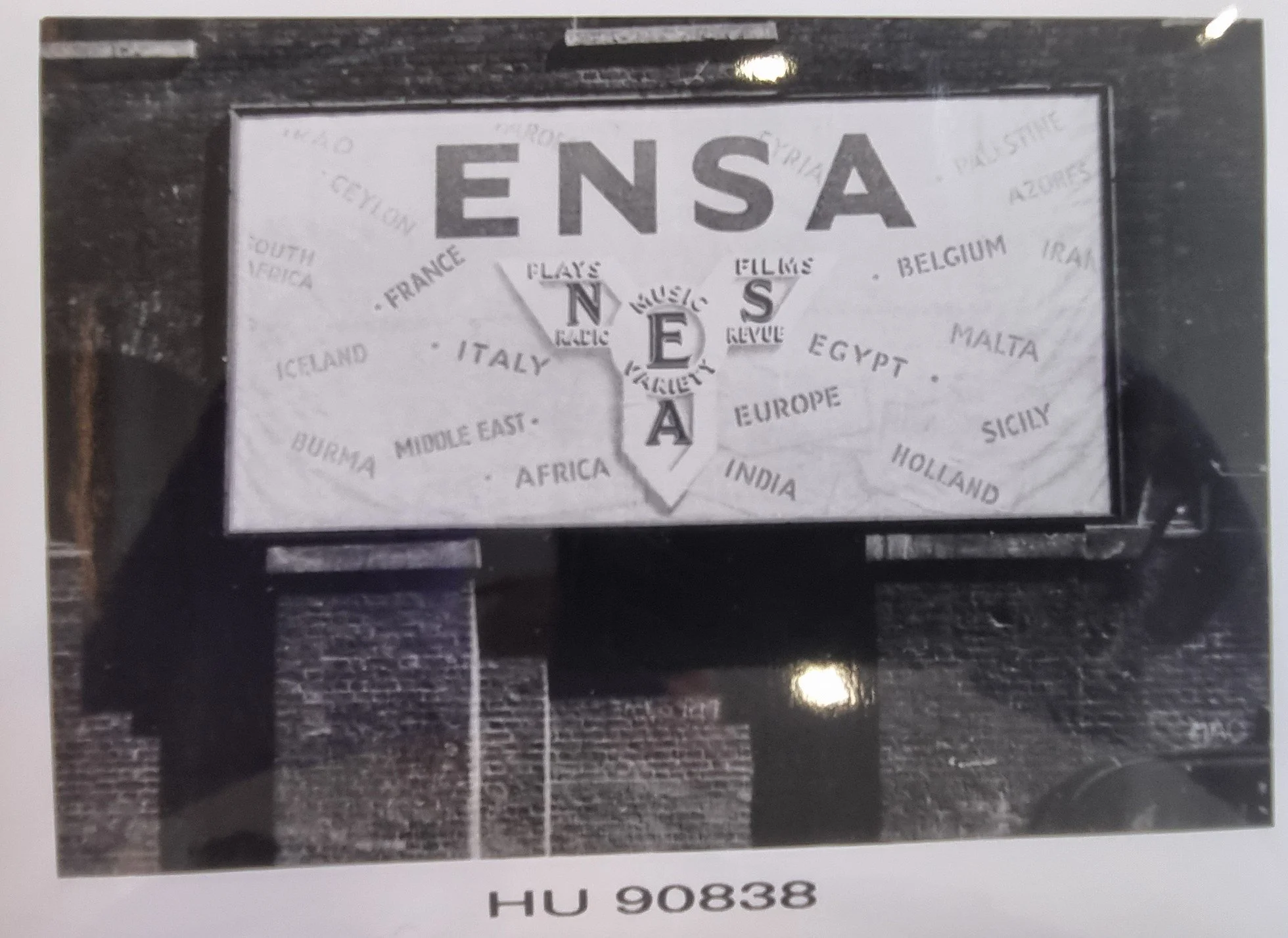
Image: ENSA Poster Outside the Theatre Royal, Drury Lane, (Source: IWM HU90838).
In November 1939, a wide-eyed Virginia Vernon stepped off a train from Paris into GHQ of the British Expeditionary Force in Arras. Whilst many biographies cover the exploits of female spies and young women during the Second World War, few are written from the perspective of a middle-aged woman. At 46 years old, Virginia had already had a successful career on Broadway and as a literary translator in Paris. Thrust into a military setting, obsessed with its acronyms and hierarchy, she had to quickly learn how to deal with male chauvinism, back-biting, and prejudice working in Arras. The love of her life, Frank (a former major), wrote to her with sage advice concerning the Army: what three pips on the shoulder meant, the importance of writing down orders, and how to get things done. If the Army was not enough, Virginia had to deal with a tsunami of talent keen to entertain the troops, including Noel Coward, Gracie Fields, and George Formby. The demanding nature of the thespians, expecting a warm bed and comfortable bar, was only outdone by the condescending manner of Major (later Colonel) Haygarth, who insisted on calling her ‘little lady’. Working around the clock to put order to chaos, Virginia managed to grab an evening here and there, to escape back to the arms of Frank in their Parisian apartment on Quai de Béthune overlooking the Seine.
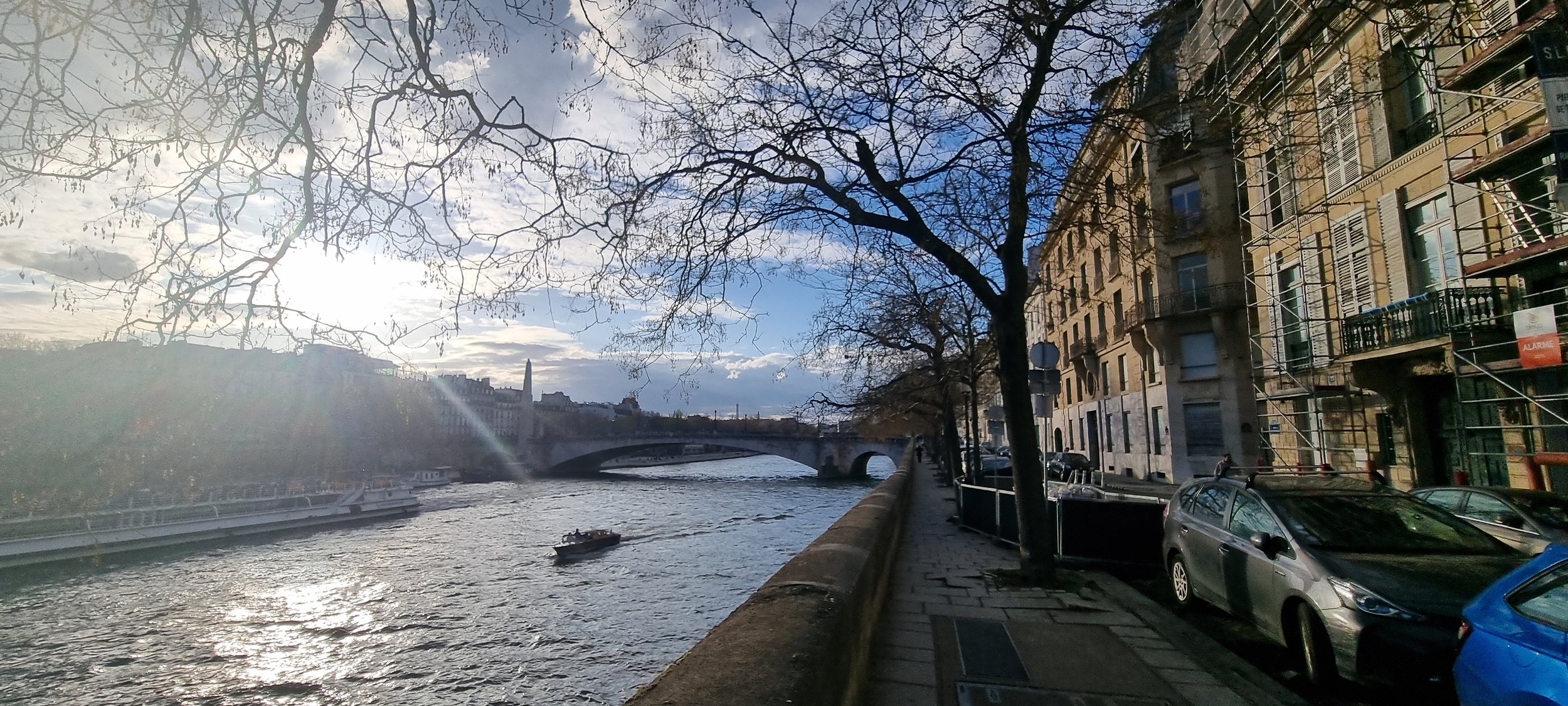
Image: the view of the Seine from 24 Quai de Béthune, Viriginia and Frank’s home in Paris. (Source: Author’s Own Collection).
Whilst dealing with a newly arrived troupe from Drury Lane, each with their own complaints and queries, a Brigadier comments admiringly to a busy Madam V that he would not do her job “for all the tea in China”. During the bitterly cold winter of 1939/40, Frank sadly caught pneumonia and passed away in a British Military hospital in Dieppe. Devastated by grief, Madam V doubled down on her work to maintain the flow of entertainment to the troops. The loss of her husband, and soon afterwards of a close friend, generated an all-consuming focus on work that kept her going for the next seven years and helped ENSA to achieve the seemingly impossible.
The Phoney War came to an abrupt end in May 1940, and Virginia joined a hellish and humiliating retreat from Arras, heading south, on roads clogged with refugees. Once the last ENSA artistes had been safely sent home ahead of the advancing German Army, Virginia boarded one of the last troopships at Brest, packed with 4,000 British soldiers. Having lost everything but the clothes she stood in, her illusions of belonging to the British Army were sharply shattered in Plymouth as Major Haygarth instructed her not to travel with the soldiers as she was “only a civilian.” Virginia, exhausted, muddy, grieving, and dispirited, caught a train to London. Loyal to a fault to ENSA’s Director, Madam V got down to work building a network of hostels and hotels across the British Isles for touring performers to reside. Through the dark days of the London Blitz, she befriended Guy Bartholomew, the editorial director and then chairman of the Daily Mirror, and Lady Edwina Mountbatten. These influential people would help Madam V in the future, along with a growing informal network that included Gracie Fields, Air Vice Marshal Tedder and Air Vice Marshal “Mary” Coningham. Her authority, assertiveness, and confidence grew during this period as she took on more responsibilities within ENSA. By the time, Virginia arrived in Tunis in May 1943 to organise entertainment to coincide with the Victory Parade in the newly liberated capital, everyone knew the name of Madam V. King George VI shared a sneaky cigarette with ENSA’s Chief Welfare Officer, after a performance, ignoring her oversized boots used for cleaning the theatre, he complimented her on her war work and wished he could get to know the troops like her. Without a military rank, Virginia learned to use her wit, energy, and charm to influence Generals, Air Marshals, and Viceroys, alike to deliver entertainment to the troops.
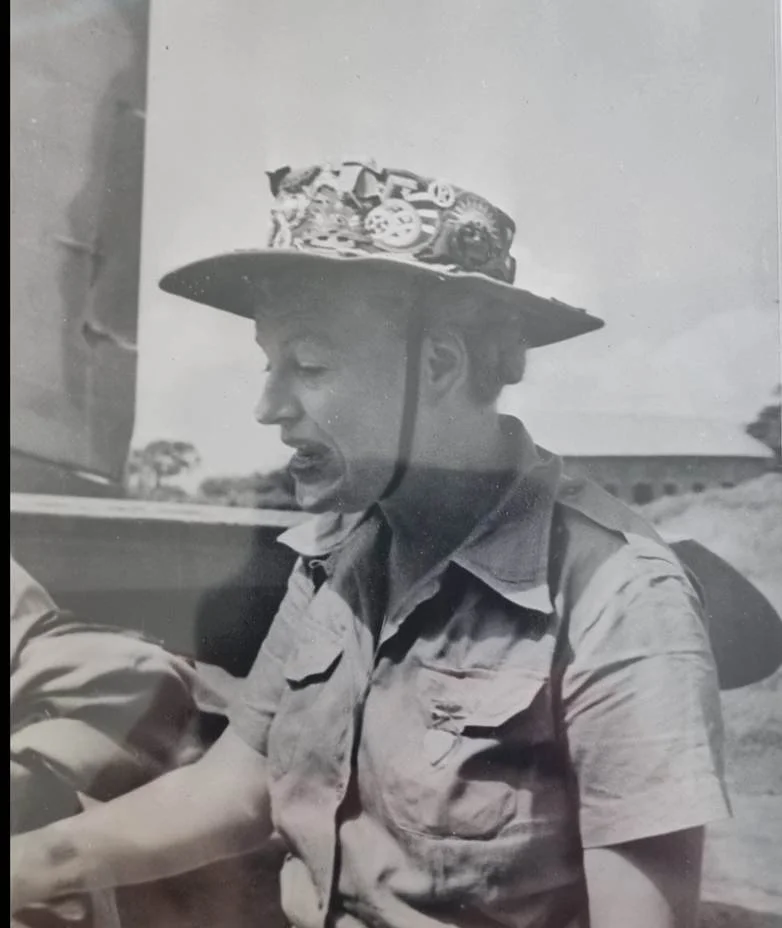
Image: Gracie Fields on Tour with ENSA (Source: IWM HU91102).
Criss-crossing the Mediterranean, Virginia became Basil Dean’s troubleshooter as ENSA’s activities in Malta, Sicily, Italy, Egypt, Morocco and Algeria developed. She accompanied Gracie Fields on her whirlwind tour of the region in September 1943 and marvelled at the Lancashire singer’s ability to touch the hearts of her audiences, reducing thousands of men to tears with her renditions of ‘Ave Maria’.[1] The bomb-damaged cities of the boot of Italy offered few habitable buildings for ENSA’s performers, and there was a shortage of necessities such as beds, mattresses, plates and cutlery. Faced with apathy and hostility from the male officers (who were deeply suspicious of this bossy civilian), Virginia took matters into her own hands. She bypassed the chain of command to ensure buildings were commandeered and showed her knack for languages and achieving the impossible by finding a family-owned factory that agreed to make ENSA mattresses and pillows. Driving between Bari, Brindisi, Taranto, Naples, Foggia, and Capua, she set up a chain of hostels, including one on Ischia for artistes on leave. A shattered Richard Llewellyn, author of How Green Was My Valley, fresh from the Anzio beachhead, turned to Virginia in Naples for help flying him back to North Africa and avoiding the hospital ship. Heading off administrative and relationship problems, Dean sent the indomitable Madam V to Cairo and then Bombay to ease the way for ENSA as its overseas workload grew exponentially.
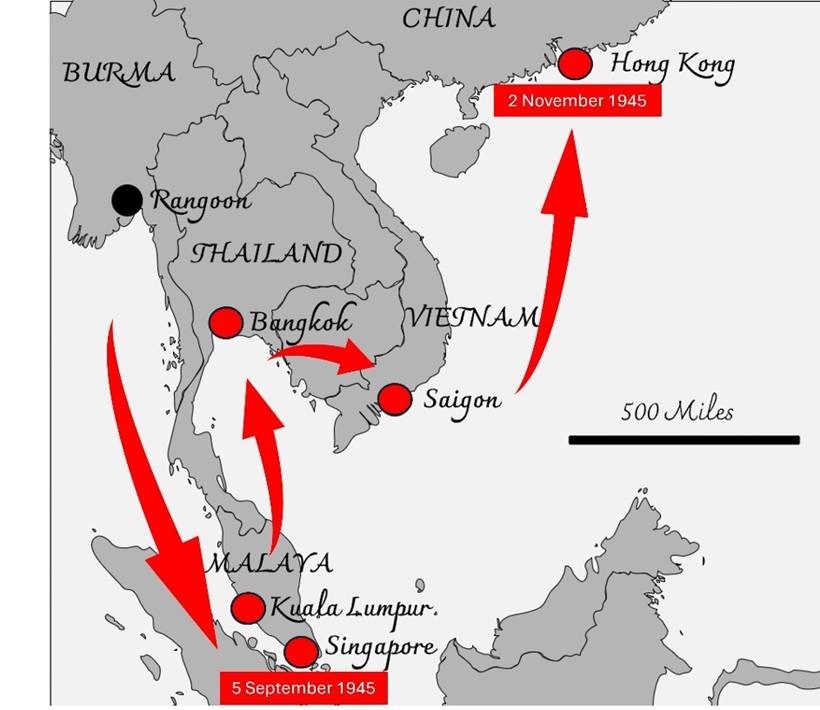
Image: A map showing Virginia’s travels after Burma in the second half of 1945. (Source: Author’s Own Collection).
Virginia’s work with ENSA continued overseas for the next two years, taking in Normandy, Belgium, Persia, Burma, Singapore, Kuala Lumpur, Saigon, and finally Hong Kong in November 1945. Tired and homesick, she made it as far west as Cairo for Christmas 1945, where she heard from Basil Dean that ENSA was to be wound up by mid-1946. Loyal to the last, she agreed to continue working in the Middle East for a few more months and eventually made it back to her beloved Paris in April 1946, resigning from ENSA at the end of June. Madam V had earned a fearsome reputation for solving problems and achieving the seemingly impossible during her time with ENSA. For her tireless work with ENSA, Virginia Vernon was awarded an MBE and the Legion d’Honneur. She was described as “the war’s most travelled woman” in the summer of 1945, and yet, no one has heard of her today.
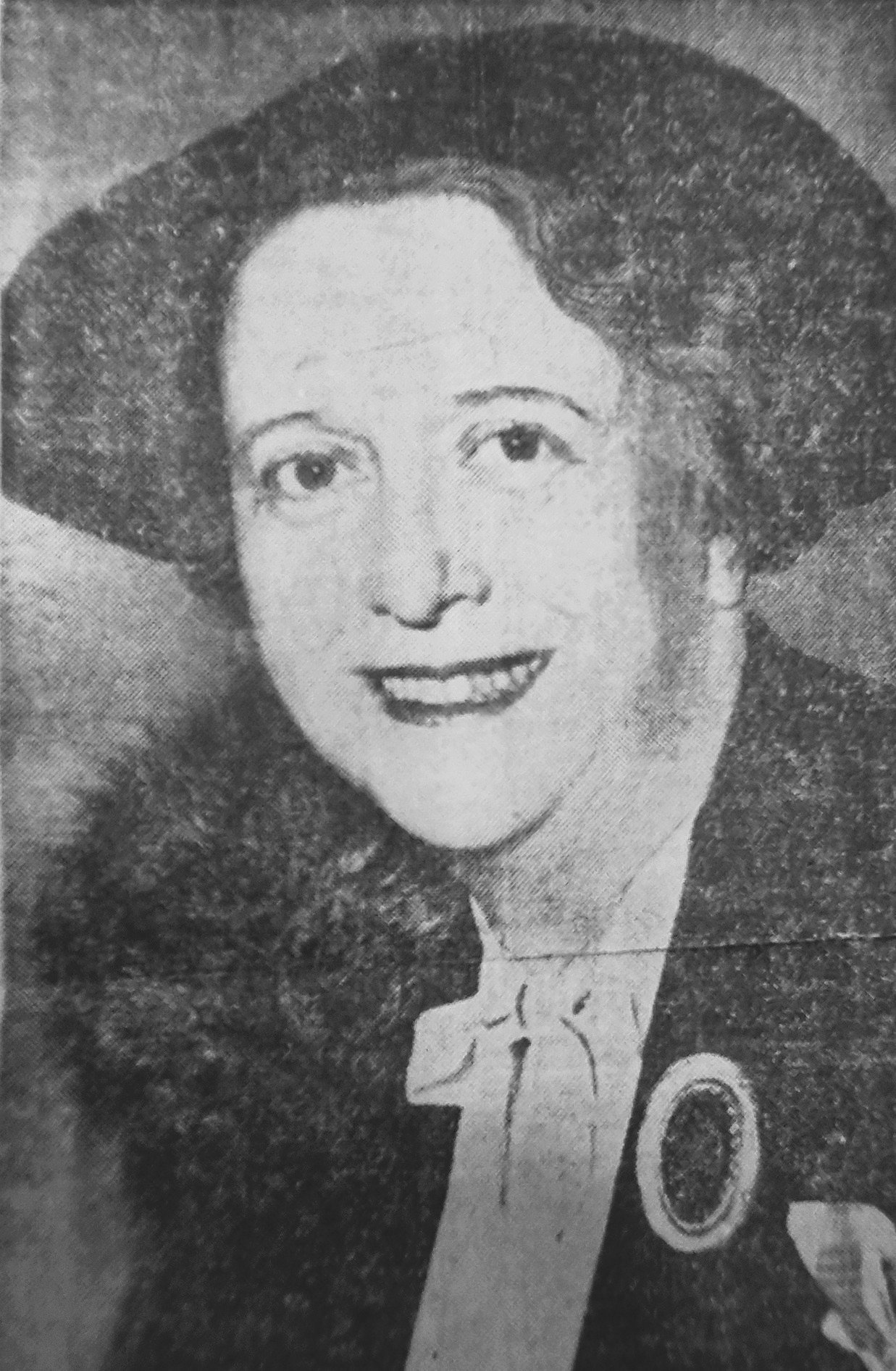
Virginia Vernon, 1947 (Source: Vancouver Sun)
Like Virginia’s story, ENSA’s memory is tinged with a bitter-sweet nostalgia remembered today by wartime re-enactors, 1940s singers, and relatives of those performers who served. By the end of the war, £17 million of taxpayers' money had been spent on ENSA during its lifetime. When the fighting stopped, many had questions about the quality of its shows, the organisation’s financial probity and accusations of cronyism.[2] ENSA was wound up in August 1946 and replaced by the Combined Services Entertainment (CSE) organisation. Appropriately, the man who had first joked that ENSA stood for ‘Every Night Something Awful’ in 1939, Tommy Trinder, gave the organisation’s curtain call on 18 August 1946 in India.[3] Perhaps inevitably, within months, Trinder had dubbed the new CSE organisation, “Chaos Supersedes ENSA” in his act. Cruelly, the organisation was denied a place in the Victory in Europe parade on 8 June 1946. Thankfully, since 2000, ENSA has been represented at the Cenotaph on Remembrance Sunday, and whilst no permanent memorial exists today, an appeal is raising money to establish a legacy dedicated to these performers at the National Memorial Arboretum. The British have always loved their institutions, whether it is British Rail, the National Health Service, or London buses, but as Collie Knox wrote: “We make jokes about them just the same, but our arrows are dipped in affectionate tolerance and not in vitriol.”[4]
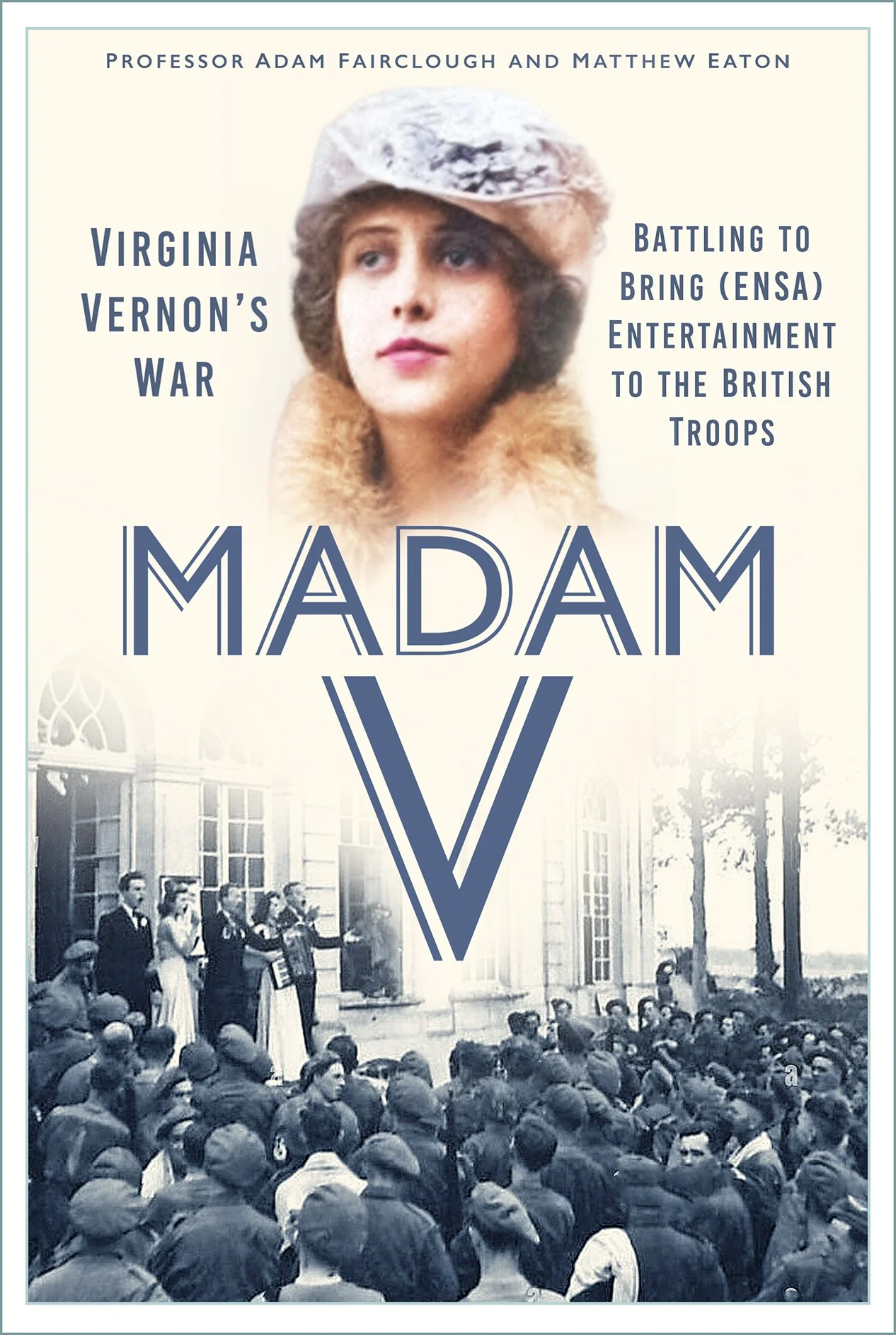
Image: Book cover of Madam V: Virginia Vernon’s War (2026) published by The History Press.
Madam V: Virginia Vernon’s War is available from The History Press and all good bookshops from 13 August 2026.
Given their important work during the war, it is surprising that no permanent memorial exists for ENSA today. I'm raising money for a registered charity that is looking to build an ENSA Memorial at the National Arboretum. If you can, please donate here:
[1] Merriman, p. 122.
[2] Miller, Service to the Services The Story of the NAAFI, p. 76.
[3] Basil Dean, The Theatre at War (George G. Harrap & Co. Ltd, 1956), p. 499.
[4] Collie Knox, It Had to Be Me (Methuen & Co Ltd, 1947), p. 181.